.avif)
KINEXON Glossary
UWB RTLS vs. RFID: What Is the Difference?
UWB RTLS or RFID? Discover the differences in real-time visibility, accuracy, and applications to determine the right solution for your operation.
The Ultimate Benchmark: RFID vs. UWB RTLS
As manufacturing and logistics operations continue to scale and automate, transparency on the shop floor becomes increasingly critical. Technologies such as RFID and Real-Time Location Systems (RTLS) play a key role in creating visibility into assets, materials, and processes. While both approaches support tracking and identification, they differ fundamentally in how and when location data is captured. The following overview outlines the core characteristics of passive RFID and UWB-based RTLS, highlighting how each technology supports industrial operations and where their capabilities begin to diverge as requirements for real-time visibility and process automation increase.

has long been used in industry to identify and track assets. RFID systems are either active, with their own power source, or passive, powered by the reader’s signal. This overview focuses on passive RFID, which records identification and position data when tagged objects pass read points. Passive RFID is widely used for inventory management, access control, and process monitoring. As operations grow more complex—with more assets, people, and automated vehicles moving across shop floors—the limits of event-based tracking become increasingly clear.
provides continuous or near-real-time visibility into the location of assets, vehicles, and personnel. Most industrial RTLS solutions are based on Ultra-Wideband (UWB) technology, as it enables highly accurate and reliable positioning. Unlike traditional RFID systems, RTLS delivers ongoing location updates rather than single read events, enabling deeper insights into movement, utilization, and process flow. This allows organizations to extend traditional RFID use cases and support advanced applications such as real-time asset tracking, workflow optimization, safety monitoring, and smart factory automation.
RFID and UWB RTLS in Industrial Tracking: A Feature Comparison
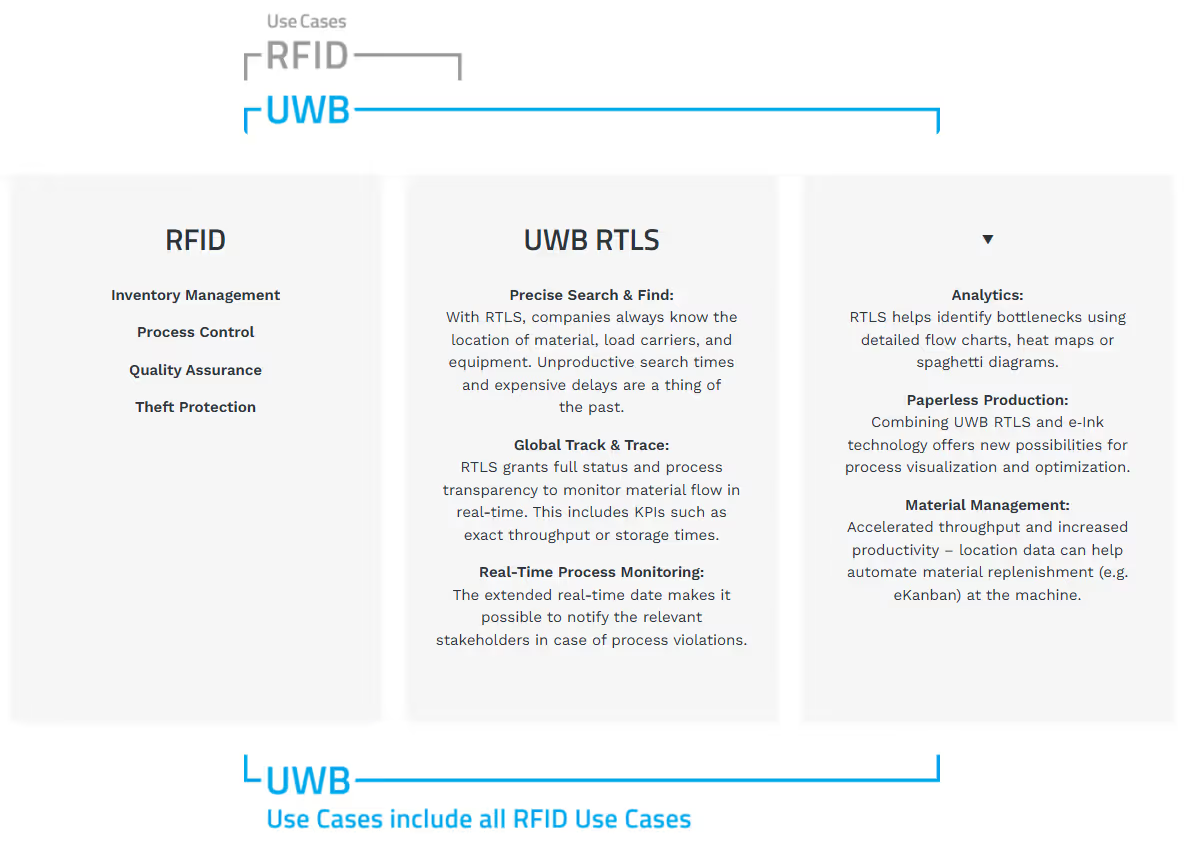
UWB RTLS: The More Precise RFID
Data Generation
Data Communication
Flexibility
UWB can be seen as the more precise evolution of RFID, delivering frequent, real-time location updates with centimeter-level accuracy. This makes it well suited for use cases that require continuous visibility and high positional precision.At the same time, location-based process automation looks different for every company.
Some workflows only require event-based tracking at defined checkpoints, where RFID remains a highly effective and cost-efficient solution. Others benefit from continuous location data across the entire shop floor, where UWB adds clear value.
.webp)
The Key of Location-Based Process Automation:
A Centralized and Technology-Agnostic Platform
The real differentiator is a centralized, technology-agnostic location platform. By integrating and normalizing data from RFID, UWB, and other positioning technologies into a single system, organizations gain a unified view of all location-based events and movements. This approach makes it possible to support a wide range of use cases—from simple checkpoint automation to continuous real-time tracking—while ensuring consistent processes, data models, and automation logic across the entire operation. It also future-proofs digitalization efforts by allowing new technologies and use cases to be added without redesigning existing workflows.

KINEXON Has Joined the Award-Winning Zebra® PartnerConnect Program as an Independent Software Vendor
This partnership marks a significant milestone as KINEXON OS has now been validated and Zebra certified to seamlessly integrate passive RFID reader data.

KINEXON RTLS Pro
Wired with superior accuracy - best for real-time automation use cases
This high performance real-time location system excels in large-scale industrial settings, delivering a superior position update rate. The outstanding tracking accuracy enables automation in order tracking and process management as well as the assembly, where high accuracy and real-time updates are essential.
Learn More About Real-Time Location Systems and How They Help Drive Digital Transformation

RTLS Whitepaper
Explore the essential features of process automation with real-time location systems. Learn the basic principles and benefits of location-based process automation (LPA).

RTLS Case Study - BMW
Learn how BMW leveraged KINEXON OS and RTLS to reach a new level of efficiency intheir manufacturing operations. The results? $10+ million in savings each year.